Side by Side: Alice, Her Health, and Her Behavior

Chiara Pezzana
October 24, 2026
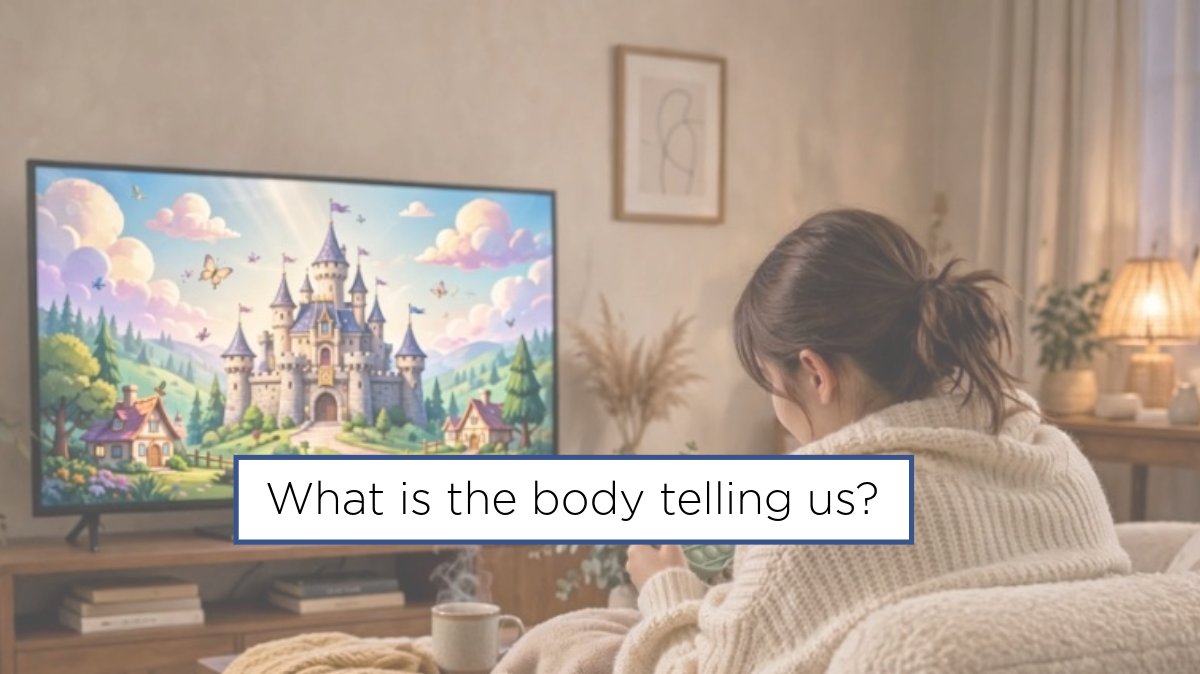
Lately, Alice has been waking up more irritable than usual. She won't accept routines she knows by heart, and she refuses transitions she usually takes in stride. Her favorite music is playing in the bathroom to help her get ready, but she just sits there, her face dark. Mom and Dad look at each other, confused. Is this just a tantrum? What's going on with her lately? Should they handle things more firmly, or adapt to this strange refusal? They know Alice better than anyone, but this time they don't know what to think.
Alice and Her Days with Rett Syndrome
Alice is a young woman with Rett syndrome. I met her a couple of years ago, when a psychiatrist colleague and her family had sought me out to complete a functional evaluation during a very difficult time for Alice.
She has big eyes that never shy away from eye contact with me. She loves the Disney princesses, and not all of them in the same way: some move her to tears, others make her laugh. She looks like a little fairy, small, delicate, and light. She struggles to use her hands to hold even something she loves. One of her hand’s trembles so much that she often holds it still with the other, behind her back.
There are days when she is cheerful and sunny and happily goes for a long walk with Mom or joins all the activities designed for her at the centers she attends. And there are days when she is afraid of everything, wakes up already exhausted, and every small instruction leads to severe self-injurious behavior.
When "It's Normal" Isn't Enough
Alice's mom and dad are kind, attentive, educated people. They have raised her with love, devoting resources, time, and plans to her well-being. But now they are worried. Someone told them this is simply what happens when people with intellectual disability and autism grow up, and that they should push her harder and "not give her attention" when she behaves this way. But they see her suffering, and they sense that this isn't the way to solve things.
Her body seems to be struggling these days. She is afraid of the dark, of night lights, of the sound of thunder. She often doesn't want to get up from her armchair, where she watches her favorite cartoons, and she doesn't want to come out from under her blanket. She often seems exhausted and weak. Some days, even walking with Mom to get bread at her favorite shop, a few steps from home, seems hard, and halfway there Alice hits herself or grabs Mom's hair.
Mom and Dad look for help and find the right doctor, the kind who looks at every angle. The doctor refers Alice to me to assess her abilities and difficulties, but also for all the necessary checkups: blood work, a visit with a gastroenterologist, an EEG, and genetic testing. It won't be easy for Alice. Some exams scare her because she doesn't know what to expect.
The Days Our Bodies Set the Pace
Think of a day you come down with the flu and a fever. A request you'd normally handle easily feels impossible. Nobody would tell you, least of all as an adult, that you're throwing a tantrum, and nobody would drag you to the gym. Sleep, fatigue, and muscle strength are part of everyone's day: not events that happen and end, but continuous variables, always there, changing hour by hour and shaping the backdrop against which everything else happens. They don't explain everything, but they are part of everything.
As physicians, we can investigate the unique characteristics of Alice's body and try to understand them better. As analysts, we can do what our mentor Dr. McGreevy taught us: observe with respect, noticing when her regulation is steadier and when it isn't, noticing her predisposition to learning, deciding which essential skills we need to teach, and understanding the functions of her behavior. Both of us observe, take data, and collect evidence.
What to Do, and When
Adapt the work in treatment to the stability of her regulation: ask more when she's doing better, ease off when she's struggling. Pair a functional analysis of her behavior with an analysis of her predisposition to learning, so we know what to do and when. And choose priorities. One of the first, for Alice, is tolerating medical procedures, because those exams are how we will come to understand her better.
A Diagnosis That Starts with Looking
Alice received her diagnosis last year, as an adult. This isn't a story about blame: it's a story about looking. Sometimes we look but don't really see. I saw her in an evaluation, and I immediately suspected a genetic cause: her beautiful, communicative eyes, her hands that don't grasp well, her weakness, her sleep disturbance, the shape of her face. It's the eye of an experienced clinician who learns to pick up the details through careful, painstaking observation.
Side by Side Health Essential Skills and Behavior Analysis
Alice carried the signs of a progressive genetic condition plainly on her body: a condition that can worsen over time and that weighs on her sleep, her muscle strength, and above all the use of her hands. She needed to be truly seen, with an expert and respectful eye, and she needed her two paths, the medical one and the work on treatment and behavior, to move side by side.
Here is our logic: work side by side on three fronts. Health, because a tired or hurting body changes everything else. Building essential repertoires, the skills that make Alice's day more understandable and more her own (for her, for example, being able to tolerate transitions and medical procedures). And behavior, always read considering the other two. None of the three waits for the others. They move together, and each helps decide what to do in the other two.
When to Reopen the Question
Even in adulthood, a clinical picture that changes always deserves a fresh look: sudden deterioration, new fears, new behavior problems, new neurological signs, loss of skills. That doesn't mean it's always genetic. It means we don't treat the question as closed. An updated genetic consultation can offer answers that weren't available years ago.
What We Can Take Home
For Alice's parents, it was enough to trust what they were seeing: that this wasn't a tantrum, and that "it's normal" wasn't a good enough answer. If you live with someone like her, your observation is already the most valuable tool you have. Even a few lines a day on how she slept, how she ate, how tired she was, and how she was doing while she did things, plus a few minutes of video, give the doctor and the team something concrete to start from.
For those who work with people like Alice, the lesson is the same: look at health, essential repertoires, and behavior together, without asking behavior to explain on its own what the body is saying. When something changes, bringing it to the doctor is part of our job. Diagnosis and treatment stay with the doctor.
Alice didn't need simpler explanations: she needed to be seen. The complexity of the people we serve calls for attention, respect, and analysis, and we won't accept reducing something so complex to something simple. Looking at the body takes nothing away from behavior analysis: it makes it more precise and more human. And this is exactly the kind of behavior analysis we at EFL believe in.
If this way of looking resonates with you, stay tuned: we're building something for all the Alices out there.
To learn more about selecting and teaching functional skills, explore the Essential for Living introductory course.
This article is not a substitute for medical advice.
Get the EFL Curriculum
Browse the complete Essential for Living collection — books, bundles, and digital resources for ABA professionals and educators.
Want to Learn More?
Insights, updates, and resources for ABA professionals, educators, and parents.